DaSy Center (2013-present; 8+ years)
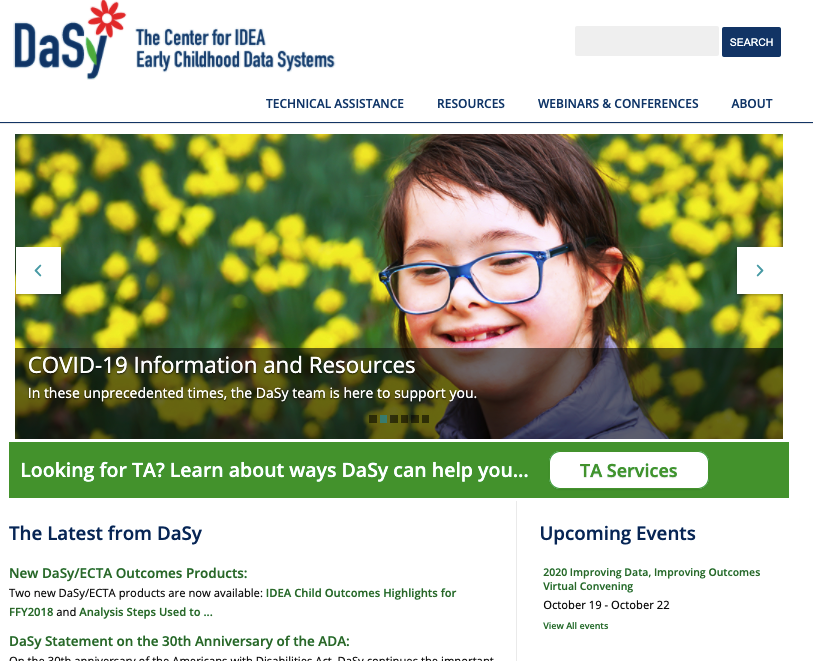
The DaSy Center is a national technical assistance center funded by the U.S. Department of Education, Office of Special Education Programs (OSEP). DaSy works with states to support IDEA early intervention and early childhood special education state programs in the development or enhancement of coordinated early childhood longitudinal data systems.
- Role: Technology director; design, implementation, user experience
- URL: dasycenter.org
- Project Type: Web Site (functionality and content), Technical Assistance
- Technology: Wordpress, PHP, CSS, Javascript
- Client: Dept. of Education OSEP
- Team: 25 including 1 developer and 1 graphic designer
- Collaborators: Renee Hockaday, Kate Borelli, Elaine Mulligan
CIRCL (2013-2020; 8 years)
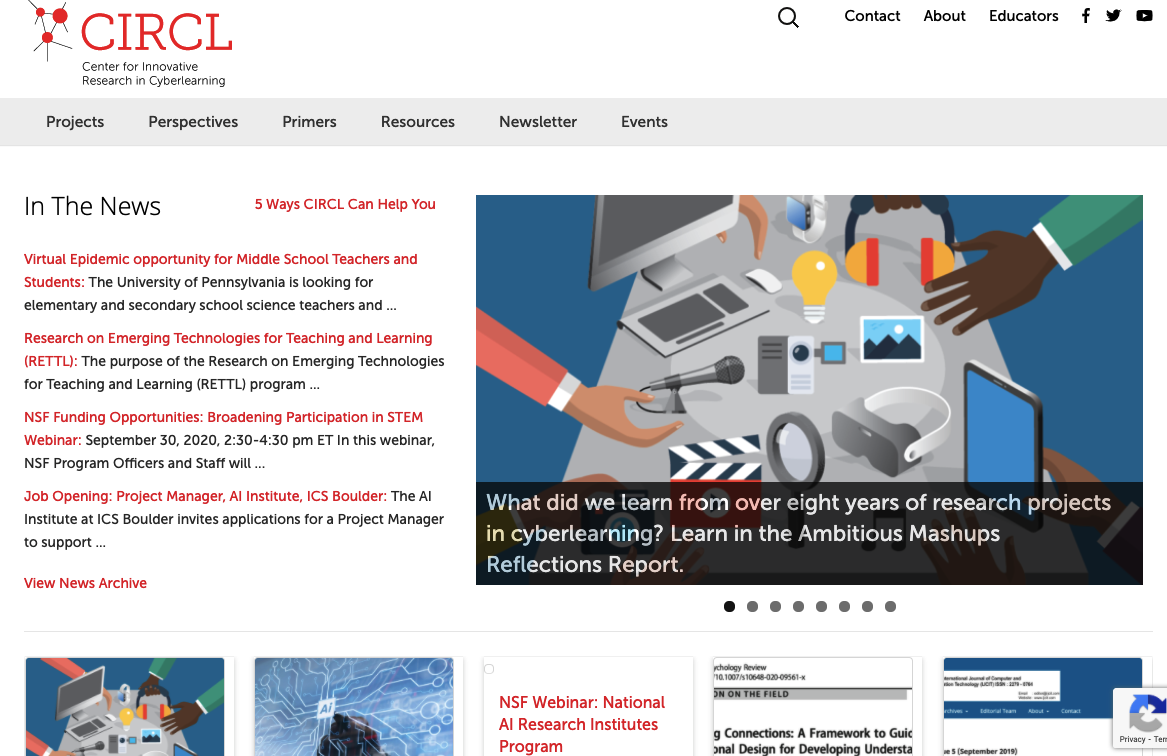
The Center for Innovative Research in Cyberlearning (CIRCL) works works with projects in the emerging field of cyberlearning to support, synergize, and amplify their efforts.
- Role: Co-principle investigator, technology director; design, implementation, user experience, project management, reporting
- URL: circlcenter.org
- Project Type: Web Site (functionality and content), Community Brokering, Synthesis
- Technology: Wordpress, PHP, CSS, Javascript
- Client: NSF
- Team: 6 including 1 developer and 1 graphic designer
- Collaborators: Jeremy Roschelle, Judi Fusco, Sarita Pillai, Cynthia D'Angelo, Shuchi Grover, Sherry Hsi
STEM Genetics (2011-2017; 6 years)
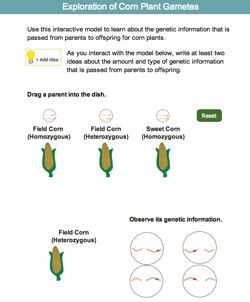
STEMGenetics is an open-source, interactive genetics curriculum that uses standards- and evidence-based best practices to help teachers prepare students for careers in science and technology, including agriculture sciences, animal and plant sciences, forensics, biotechnology, clinical and public health. The curriculum spans elementary, middle, and high school grades to develop and build on students’ understandings of key genetics concepts. Learn more in this NSF Spotlight: Hooked on STEMGenetics.
- Role: Technology director; design, implementation, and user testing of interactives; reporting
- URL: wisegenetics.sri.com and see also a demo
- Project Type: Interactive Simulations
- Technology: HTML5, Javascript, CSS
- Development Tools: Intellij IDEA, SVN
- Client: NSF
- Team: 4 at SRI, including 1 developer and 1 graphic designer
- Collaborators: Angela Haydel DeBarger, Kevin McElhaney, Michelle Williams, Kate Borelli
Tapped In (1996-2013; 17 years)
Tapped In was an online community for education professionals. Through Tapped In, educators extended their professional growth beyond courses or workshops with online tools, resources, colleagues, and support to implement effective learning activities.
- Role: Co-principle investigator, technology director; design, implementation, user testing, reporting
- URL: tappedin.org
- Project Type: Web Application, Online Community
- Technology: Java, Expresso, JSP/HTML, CSS, Javascript, MySQL, Resin
- Development Tools: Intellij IDEA, Ant, CVS, Morebot
- Client: NSF, community tenants
- Team: 7 including 3 part-time developers and 1 graphic designer
- Collaborators: Mark Schlager, Judi Fusco, Zaz Harris, Melissa Koch, Larry Hamel, Aaron Becker
CLTNet (2003-2011; 8 years)
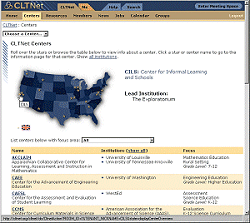
CLTNet was an online community developed to support the NSF-funded Centers for Learning and Teaching, which aimed to enrich and diversify the national infrastructure for instruction in K-12, undergraduate, and graduate education in science, technology, engineering, and mathematics (STEM).
- Role: Co-principle investigator, technology director; design, implementation, user testing, reporting
- URL: cltnet.org (originally); see youtube video tour
- Project Type: Web Application, Online Community & Digital Library
- Technology: Java, Expresso, JSP/HTML, CSS, Javascript, MySQL, Resin
- Development Tools: Intellij IDEA, Ant, CVS, Morebot
- Client: NSF
- Team: 7 including 3 part-time developers and 1 graphic designer
- Collaborators: Mark Schlager, Judi Fusco, Zaz Harris, Melissa Koch, Larry Hamel, Aaron Becker
Group Scribbles (2006-2010; 4 years)
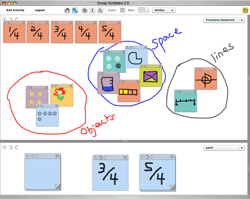
Group Scribbles offered implementers, instructors and students a powerful metaphor for thinking about and realizing collaborative learning activities. The metaphor was based on common physical artifacts from the classroom or office: adhesive notes, bulletin boards, whiteboards, stickers, pens, and markers. Our research focused on employing this metaphor to support emergent collaborative activity across connected, co-located machines to enable high-performance, synchronous, face-to-face collaborative experiences.
- Role: Principal Investigator, design, user testing, reporting
- URL: groupscribbles.sri.com
- Project Type: Desktop/Tablet/Handheld Application
- Technology: Version 2: Flash/Flex; Version 1: Java, Swing, SWT
- Development Tools: Eclipse, CVS
- Client: NSF
- Team: 8 including 3 part-time developers
- Collaborators: Nathan Dwyer, Jeremy Roschelle, Chris Digiano, Zaz Harris, Jasmine Lopez, John Brecht, Raj Chaudhury
Calipers (2005-2008; 3 years)
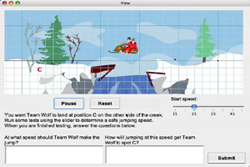
The Calipers project developed and evaluated simulation-based assessments to provide high-quality evidence of complex performances in science tests for both accountability and formative goals. Assessments were developed in the areas of forces and motion (physical science) and populations and ecosystems (life science).
- Role: Technology director; design, lead developer, reporting
- URL: calipers.sri.com
- Project Type: Desktop Application (Cross-platform)
- Technology: Java, Javascript
- Development Tools: Intellij IDEA, Ant, CVS
- Client: NSF
- Team: 5 including 2 part-time developers and 1 graphic designer
- Collaborators: Edys Quellmalz, Angela Haydel DeBarger, Zaz Harris, Aaron Becker
NanoSense (2004-2008; 4 years)
The NanoSense project developed curriculum units to help high school students and teachers understand nanoscale science and integrate these concepts with traditional curricula. The project also convened two national workshops to bring together experts and practitioners in nanoscience and learning science to clarify learning goals for nanoscience, as well as teacher training workshops at SJSU.
- Role: Principle investigator; design, evaluation, workshop management, reporting
- URL: nanosense.sri.com
- Project Type: Curriculum, Animations
- Technology: Flash, HTML, CSS, ChemSense
- Development Tools: Flash, CVS
- Client: NSF
- Team: 5 including 1 part-time graphic designer
- Collaborators: Tina Stanford, Anders Rosenquist, Alyssa Wise, Aaron Becker, Joe Krajcik
ChemSense (1999-2002; 3 years)
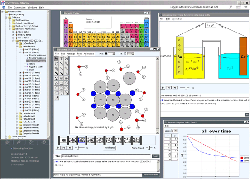
The ChemSense project developed software and curriculum activities to help students understand chemical concepts through the use of tools that help them visualize the world of molecular entities and reactions. Multiple design studies and implementation studies were conducted to refine the software and document changes in students' and teachers' representational and discursive practices, as well as the value of visualizations for enhancing students' understanding of the behavior of particulate entities.
- Role: Principle Investigator, technology director; design, user testing, lead developer, evaluation, reporting
- URL: chemsense.sri.com
- Project Type: Desktop Application (Cross-platform)
- Technology: Java, Swing, Expresso, JSP/HTML, CSS, MySQL, Tomcat
- Development Tools: Intellij IDEA, CVS
- Client: NSF
- Team: 6 including 2 part-time developers and 1 graphic designer
- Collaborators: Robert Kozma, Brian Coppola, Anders Rosenquist, Vera Michalchik, Tina Stanford, Aaron Becker